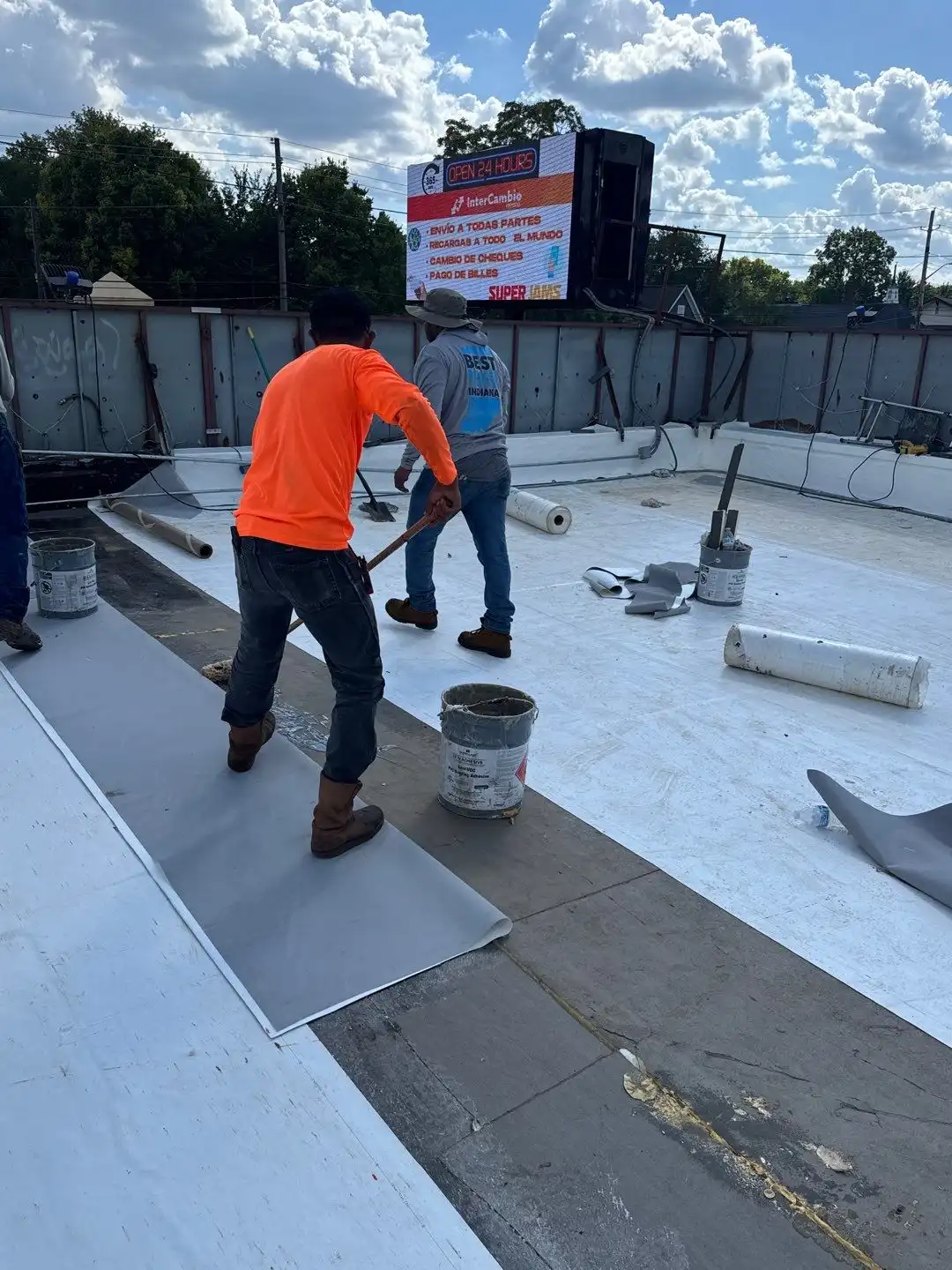
What buyers get wrong about TPO, EPDM, and PVC
A few persistent beliefs lead Dyer building owners to the wrong membrane, or to distrust the right one. Clearing them up makes the comparison cleaner and the decision better.
Myth: TPO is the cheap option, so it must be lower quality
TPO's lower installed cost does not make it a lesser roof. On a clean, simple Lake County roof, a quality TPO from a reputable manufacturer, welded by a skilled crew, is an excellent long term membrane. The real variable with TPO is not price, it is consistency, since formulations vary by maker. Buy a good product and install it well and the low cost is just an advantage, not a warning sign.
Myth: EPDM is outdated
Because EPDM has been around for decades, some owners assume it has been surpassed. It has not. That long history is a strength, not a sign of obsolescence, and EPDM's cold flexibility and durability keep it a strong choice for many Dyer buildings. What has changed is that reflective membranes now compete on energy, but for a building where track record and cold performance matter more than cooling savings, EPDM remains a smart, current option.
Myth: PVC and TPO are basically the same
They look similar, both white thermoplastics with welded seams, but their chemistry differs in ways that matter under exposure. PVC's resistance to grease, chemicals, and ponding is meaningfully better, which is why it costs more and why it is specified for restaurants and process buildings. Treating them as interchangeable leads owners to put TPO on a roof that needed PVC, and to pay for it when the grease exposed membrane fails early.
Myth: the membrane is what determines whether the roof leaks
Owners often fixate on the membrane brand and overlook that most roof leaks start at the details, the seams, flashings, and penetrations, not in the field of the membrane. A premium membrane installed with sloppy details will leak before a value membrane installed with care. The system matters, but the installation quality at the details matters just as much, which is why who installs your Dyer roof is as important as which membrane you choose.
The clearer picture
Drop the myths and the three membranes sort sensibly: TPO is a quality value membrane for clean roofs, EPDM is a proven cold flexible rubber, and PVC is the premium choice for tough exposure, with installation quality deciding leaks across all three. None is a trap and none is outdated. The right one depends on your building, and the install has to be done well regardless.
Decide on facts, not folklore
Myth: a thicker membrane always lasts longer
Membrane thickness, measured in mils, matters, but more is not automatically better in a simple linear way. A thicker membrane resists punctures and weathering better and often carries a longer warranty, which is why it can be worth specifying on a Dyer roof with foot traffic or hail exposure. But thickness does not fix a bad seam, poor detailing, or the wrong membrane for the exposure. A thick TPO over grease still fails where the grease attacks it. Thickness is one factor in durability, useful within the right membrane choice, not a substitute for choosing the right membrane and installing it well in the first place.
Myth: the warranty covers everything
Owners sometimes treat a manufacturer warranty as blanket protection, then discover its limits at the worst time. Warranties vary widely in what they cover, material only versus full system, what maintenance they require to stay valid, and what voids them, including ponding water on some systems or unauthorized repairs. A warranty is real protection, but only when you understand its terms and meet its conditions, including using an approved installer and keeping up the required maintenance. Reading the warranty on your Lake County roof before you sign, not after a problem, is how you make sure the coverage actually backs you up when you need it.
Myth: you must match the existing membrane
When replacing a roof, owners sometimes assume they have to install the same membrane that was there before, but a tear off is exactly the moment to reconsider. The original membrane may have been chosen for cost, for a contractor's convenience, or for conditions that have since changed, and a replacement is a fresh chance to put the right membrane on for how the Dyer building is used now. If the old roof was TPO and the building added a kitchen, the replacement might rightly be PVC. Matching the existing membrane only makes sense if it was the correct choice to begin with and the building's exposure has not changed, so treat a replacement as a new decision rather than a repeat of the old one.
Myth: a darker roof is always worse
The energy advantage of reflective membranes is real in a cooling climate, but it does not make black EPDM a bad choice everywhere. On a building where heating dominates, or where the roof is shaded, or where the owner values EPDM's track record and cold flexibility, the darker membrane can be the right call despite absorbing more summer heat. The reflectivity factor is one input among several, not an automatic disqualifier, and weighting it correctly for your Lake County building's actual energy profile is what matters. A blanket rule that white always beats black oversimplifies a tradeoff that depends on the specific building.
None of this is meant to overwhelm the decision, because in practice the building's conditions resolve most of it quickly. The point of laying out the full picture is so a Lake County owner can recognize when their roof is a clear cut case and when it genuinely benefits from a closer look, rather than guessing in either direction. That recognition is what separates a confident choice from a coin flip.
One practical habit separates owners who are happy with their commercial roof from those who are not: they decide based on a documented look at the building rather than a verbal recommendation. A Dyer roof assessed with the building's exposure, drainage, energy profile, and budget all on the table produces a membrane choice that holds up, because nothing important was guessed. The verbal version, where a contractor names a membrane after a quick walk, skips the variables that actually determine which system fits, and it tends to land on whatever that contractor installs most. Asking for the reasoning behind a recommendation, and the building conditions that support it, is how you tell a fitted choice from a default one. It costs nothing to ask, and on a roof you will own for two decades, the answer is worth having in writing before you commit to a membrane and a crew.
An accurate read of the three membranes, paired with a real look at your building, is what produces a good decision. Dyer Commercial Roofing gives Dyer owners that straight comparison and installs all three to the standard that keeps the details watertight. Call (765) 676-3491 for an honest recommendation and a roof installed right. That is the difference between spending on the roof you have and the roof you assumed you had.