The Warehouse That Did Not Need Full Tear-Off
Back to that Dyer property manager. When our crew arrived for the free inspection, we found a 15 year old TPO membrane with failed seams across about 40% of the field. The previous bid called for complete tear off down to the deck, new insulation, new cover board, new membrane. Roughly $312,000.
Our inspection told a different story. The existing insulation tested dry in 80% of the field. The deck was sound. What she actually needed was a targeted tear off over the wet zones, a recover system over the rest, and new flashings throughout. Final cost landed near $274,000. Timeline ran 19 working days because we sequenced the work by tenant zone instead of treating the whole roof as one project.
The lesson she shared with us afterward: get a moisture survey before you accept any replacement bid. We use infrared and capacitance meters during inspections specifically to avoid replacing insulation that does not need replacing. She also mentioned that two of her tenants had been preparing for a full vacate and relocate plan based on the original bid's noise and access expectations. By sequencing in zones, we kept all four tenants operating without a single complaint logged through her property management software. That alone saved her an estimated $18,000 in tenant concessions she had already budgeted as a worst case. If you want to understand how that diagnostic process works, our writeup on commercial roof inspections covers the equipment and methodology.
The Restaurant Owner Who Waited Too Long
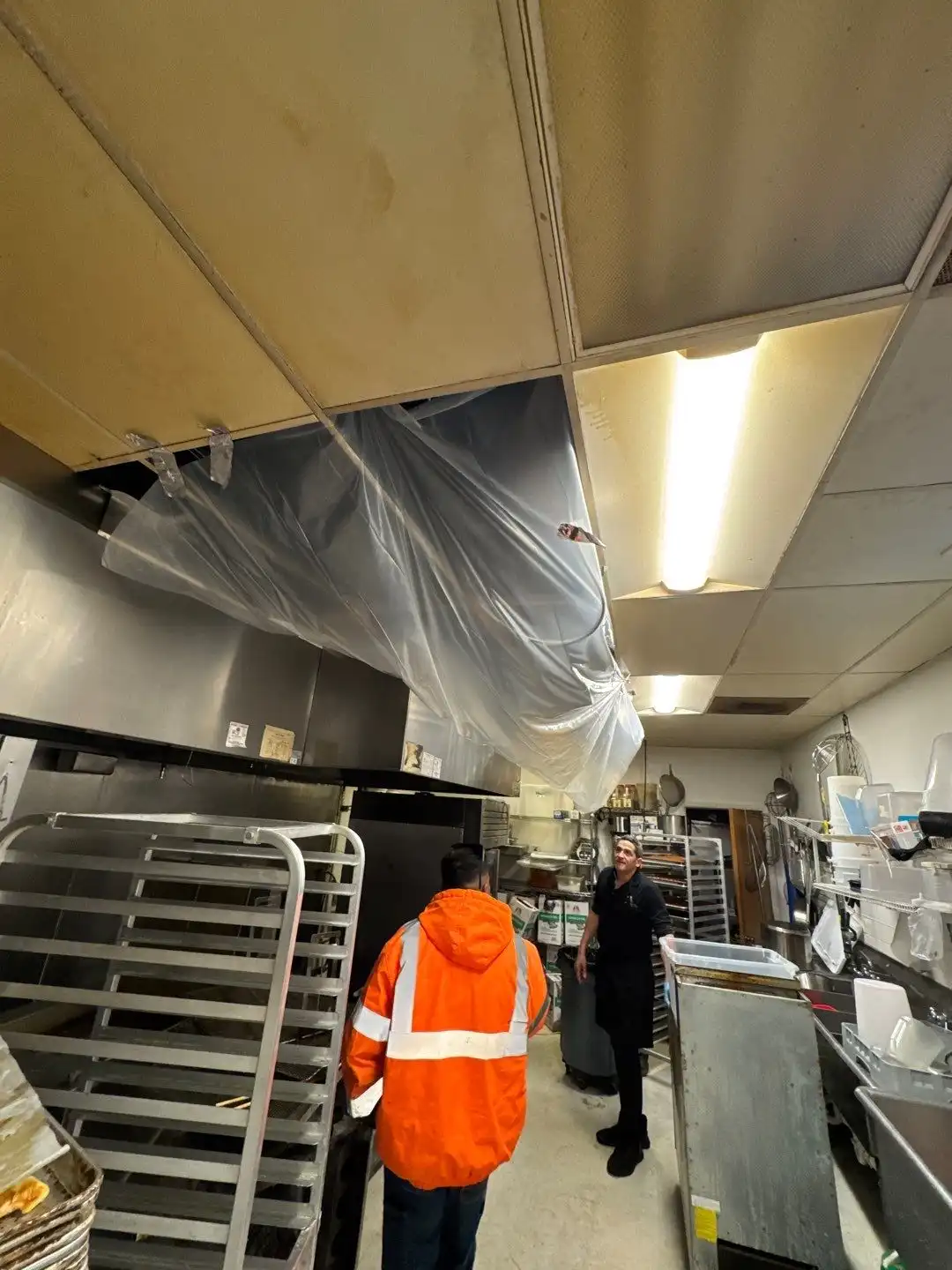
A Dyer restaurant owner called us in February after a ceiling tile collapsed onto a dining table during lunch service. Embarrassing, expensive, and avoidable. He had known about a slow leak for almost two years and kept patching it.
By the time we got on the roof, the modified bitumen membrane was beyond repair. Saturated insulation across nearly the entire 8,400 square foot roof. Deck corrosion in three sections. What might have been a $14,000 repair job 18 months earlier became an $86,000 replacement plus interior restoration.
His project ran 11 working days for the roof itself. The interior ceiling, drywall, and HVAC cleanup added another two weeks and an insurance claim that only partially covered the damage because the leak history was documented. The grease laden exhaust hoods on his cook line also complicated tear off because the old membrane around those penetrations had absorbed years of airborne residue, which meant special disposal handling and slower work around those curbs. He has since put a twice yearly inspection schedule in place, which is the single change he wishes he had made the day he bought the building. If you are watching a small leak grow, our piece on when to coat vs replace your commercial roof can help you decide before it becomes the restaurant owner's situation.
The Office Park That Compared Three Systems
One Dyer office park owner with four buildings wanted to replace all four roofs over two summers and asked us to bid three different membrane systems so he could compare. Sized to 22,000 square feet per building, his installed costs landed in these ranges: EPDM at 60 mil came in between $7.50 and $9.50 per square foot, TPO at 60 mil between $8.50 and $10.50, PVC at 60 mil between $10.00 and $12.50, and standing seam metal between $12.00 and $16.00. Those ranges reflect typical Central Indiana conditions including insulation, flashings, and tear off where applicable.
He ended up choosing TPO for three buildings and PVC for the fourth because that building housed a restaurant tenant with grease exhaust. Total project ran across two summers with each building taking between 14 and 21 working days depending on penetration count and parapet detail. The penetration count made a bigger difference than the square footage. Building three had 47 rooftop units, vents, and skylights, and that alone added five working days compared to building one, which had a cleaner field with only 22 penetrations.
What These Stories Have In Common
Four very different projects, four different cost structures, four different timelines. The thread connecting them is honest inspection up front. Every one of these owners avoided either overspending or underspending because the diagnostic work happened before the bid, not after the contract was signed. That is the standard Dyer Commercial Roofing brings to every commercial replacement in Dyer, and it is the reason our repeat client rate keeps climbing year over year.
The Manufacturing Plant That Could Not Stop Production
This one taught us the most about timeline. A Dyer manufacturing plant needed a 64,000 square foot replacement and could not shut down a single production line. Conventional thinking would say that project takes 8 to 10 weeks minimum.
We sequenced it in six zones, worked nights over the most sensitive equipment, and built temporary protection over the production floor in each phase. Total elapsed calendar time was 11 weeks. Total working days on the roof were 34. Cost ran $612,000 against a budget of $675,000.
The owner's biggest concern going in was water intrusion during the work, especially given how often Dyer sees afternoon storms in June and July. Our crew kept dry in materials staged at all times and prioritized tarping and temporary membrane any time weather moved in. There was one Saturday night thunderstorm that required four hours of emergency dry in work, and we did not lose a single production hour. If active leaks are already happening on your building, our commercial emergency roof repair page covers how we handle interim protection while planning a full replacement.
Questions Every Owner Should Ask Before Signing
Across these four projects, the owners who got the best outcomes asked sharper questions during the bid phase. A few worth borrowing:
- Has a moisture survey been performed, and can I see the results before tear off scope is finalized?
- What is the sequencing plan if weather or tenant operations require schedule changes mid project?
- Which warranty covers the membrane, which covers labor, and what voids each one?
- How are penetrations, drains, and parapet flashings handled, and who fabricates the metal?
Owners who get clear answers to those four questions before signing tend to land within 5% of the original bid. Owners who do not often see change orders pile up in the final week.